
 What does "believe" mean?
The personality of Abraham is of extraordinary importance to both Jews and Christians. Genetically, of course, Abraham is the ancestor of a great nation that gave the world the Torah and the knowledge of God. However, in his letter, Paul calls all believers, “You are the seed of Abraham and heirs according to the promise.” This emphasizes the importance of the spiritual example of Abraham, whose life was based on faith.
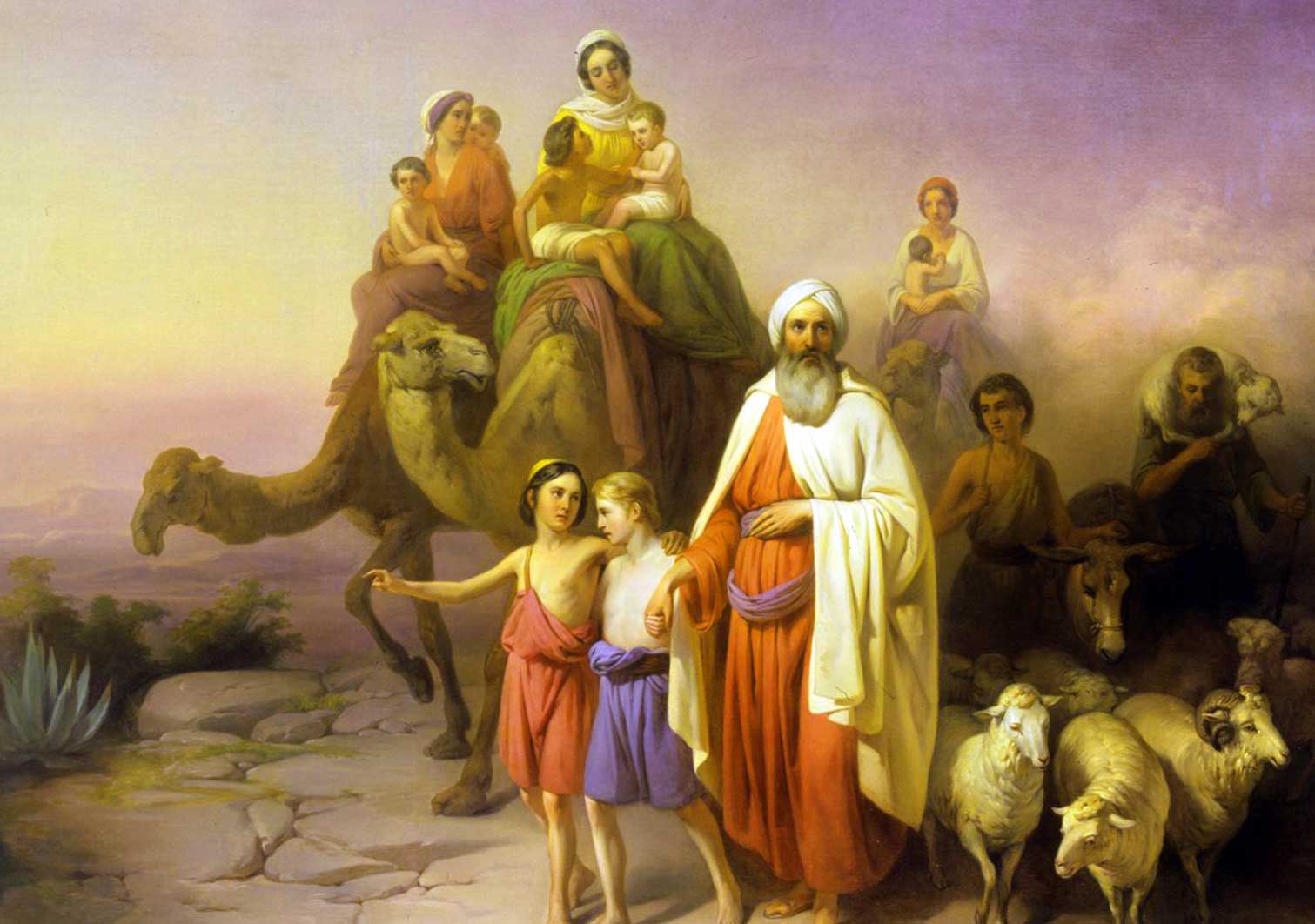
God's command given to Abraham, “go," is often romanticized. Bible readers often imagine a peaceful journey when speaking of Abraham's travels, mostly because of drawings and paintings (one of which is intentionally chosen as an illustration for this article) and children's books with pictures. In order to see the act of faith that Abraham performed, we should imagine the city in which he lived, what he had, and what he initially received as a result of obeying God. Brockhaus characterizes Haran as follows: “An important commercial city in Northwestern Mesopotamia, on the Balikh River, a left tributary of the Euphrates, about 450 km northeast of Damascus. Caravan routes from Babylon to Asia Minor, Aram (Syria), and Egypt crossed here. In Assyrian inscriptions, this city is called Ir-Harran. Even if Haran was not a capital city, it certainly aspired to be a strong regional center with a developed infrastructure and significant financial capabilities. Researchers note an unprecedented level of economic and technological development in this region at that time.
It is possible that Abraham lived near this city and enjoyed a nomadic lifestyle. Perhaps there were turbulent times in Mesopotamia at that time, and Abraham's father had to seek a better life. We do not know for sure. But certainly, living in tents was not the most comfortable choice, and Lot’s example illustrates that. Lot justified his separation from Abraham by insufficient pasture, but in reality, he missed city life. So why did God call Abraham to leave his relatives and home?
Scholars note that the Mesopotamian cities of Abraham’s day were built around central temples. In addition to its direct function, the temple also served as a hub for the distribution of goods. Why was this? It was because everything produced in the vicinity of the city was usually brought to the temple and then redistributed among the citizens. This means not worshipping the idol of that temple was equal to losing all means of existence since a person who did not participate in the religious-economic life of the city had no chance of survival. That is why God calls Abraham to true freedom. Despite the dangers, hunger, and wars, Abraham receives the most important asset: personal communion with God.
To believe, as Abraham showed, is to follow God, even when it is uncomfortable, economically unpromising, and even dangerous.