
Reading about the prophet Daniel and his book in the pages of Shabbat Shalom may surprise some. Yet we should realize that the biblical book of Daniel has not only been, traditionally, a place where Jews and Christians have met but also where they have departed from each other.
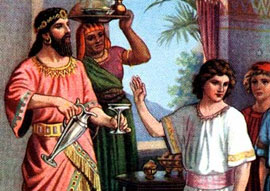
The book of Daniel speaks to Jews as it relates the experience of Daniel the Jew in exile, his struggles to save his identity under the oppression of assimilation, his suffering under anti-Semitic attacks, and his faithfulness to the Torah and God. He chooses to eat Kosher when everyone else is eating the great social meal of the king; he keeps praying three times a day at the risk of his life.
But Daniel is also a Jew who dreams and hopes for the peace of Jerusalem. In this book, the Jew has learned the value of righteousness and the power of hope within hopelessness.
The book of Daniel also speaks to Christians, describing the person and redeeming actions of the Messiah, even predicting the exact moment of His first coming. Significantly, it is from this book that Christians created their first greeting, Maranatha—words written in the vision of the coming of the Son of Man with clouds. This book, more than any other book of the Hebrew Bible, has inspired the hopes of Christians waiting for the return of this Messiah, who, they believe, will save the world and bring His children to Jerusalem.
In Daniel’s book, the Christian has learned about the grace that comes down to save him and the faithfulness of the God who fulfills His promises and prophecies in due time. On the other hand, it is sad to observe that this book has played a dramatic role in the Jewish-Christian separation. For many Christians, the book of Daniel has been used not only to support and strengthen Christian faith, but it has also been brandished like a weapon of death “against” the Jews. Indeed, on the basis of a distorted reading of the beautiful text of the 70-week prophecy, for example, a number of Christians have forged a whole theory of replacement of the Jews and, by implication, of rejection of the Jews. Ironically, the “good news” for Christians became the “bad news” for Jews. No wonder, then, that Jews have distanced themselves from this book and have become suspicious or simply indifferent toward Daniel’s book!
Jews and Christians should, therefore, learn to read—to reread—the book of Daniel with a fresh eye. They should learn to do it together, listening to each other: the Jew stressing the value of justice and the Torah; the Christian singing about the grace of God and the coming of the Messiah. Each without hatred or suspicion. Who knows? In the breath of this effort, they may not only come to appreciate a different face of a traditional enemy, but they may even discover a new face of their God, perhaps the most important one.
Image: Daniel refusing to eat at the King's table, early 1900s Bible illustration. Public Domain